IVF-Reputation Gap Report
The IVF Reputation Gap: Why 35.6% of Fertility Practices Are Invisible to Patients
Before a prospective patient ever calls your clinic, they've already judged you. New benchmark data from 671 fertility practices across 25 states reveals how your Google score has quietly become your most important patient acquisition asset — or your biggest liability.
Get the Free Report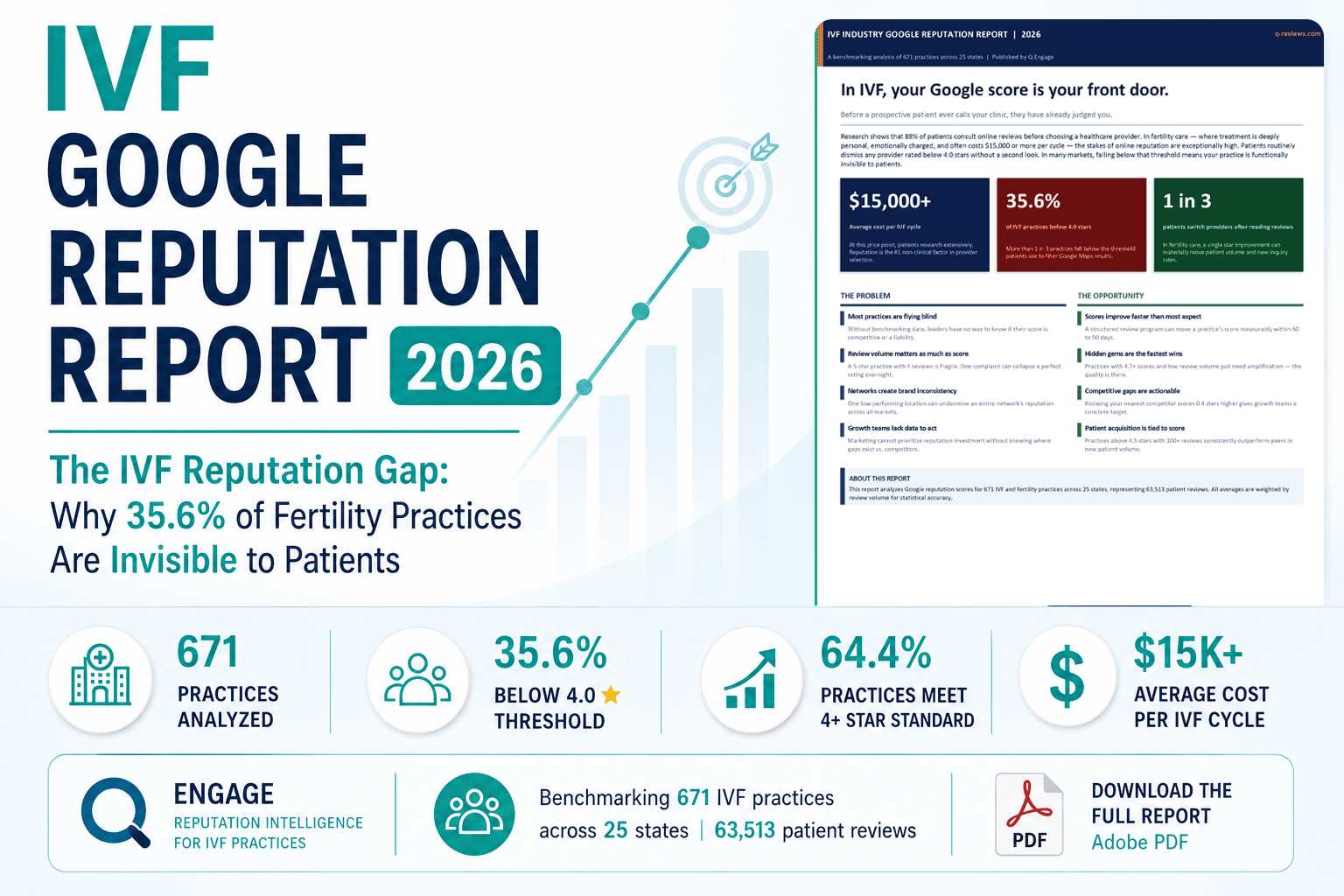
88% of patients consult online reviews before choosing a healthcare provider
35.6% of IVF practices fall below the 4.0-star threshold patients use to filter Google Maps
1 in 3 patients switch providers after reading reviews
You’re investing everywhere except the place patients look first
Fertility practices pour resources into marketing, physician recruiting, patient experience, and growth initiatives. Yet more than one-third fall below the Google rating threshold patients use to evaluate providers. In a category where treatment costs $15,000+ per cycle and the decision is deeply personal, patients research extensively — and they routinely dismiss any provider rated below 4.0 stars without a second look.
In many markets, falling below that threshold doesn’t mean fewer inquiries. It means your practice is functionally invisible.
This isn’t a story about reviews. It’s a story about revenue.
Reputation is the #1 non-clinical factor in fertility provider selection. The data shows practices above 4.5 stars with 100+ reviews consistently outperform their peers in new patient volume — and a single-star improvement can materially move inquiry rates. The gap between the top of the market and everyone else is wide, measurable, and growing: the top 10% of practices average 4.86 stars and capture 33.5% of all patient reviews.
What’s inside the report
- The 4.0 patient trust threshold — and why 35.6% of practices sit below it
- Industry snapshot: 671 practices, 25 states, 63,513 patient reviews analyzed
- Score tier benchmarks: what the top 10%, top 25%, and bottom 25% actually score
- The review-volume vulnerability: 43 practices where one bad review could collapse a perfect rating
- Why scores improve faster than most leaders expect (60–90 days with a structured program)
Who this is for
Practice owners, network executives, and marketing/growth leaders at IVF and fertility practices who want to know — with data, not guesswork — whether their Google presence is winning them patients or quietly turning them away.